Installation
Placement
Where the tracker goes so it sees the sky, stays dry and stays out of the driver's reach.
A tracker needs two signals: GPS from the sky and the mobile network. Metal blocks both. Placement is the difference between a clean route on the map and a vehicle that jumps around or goes silent in the depot.
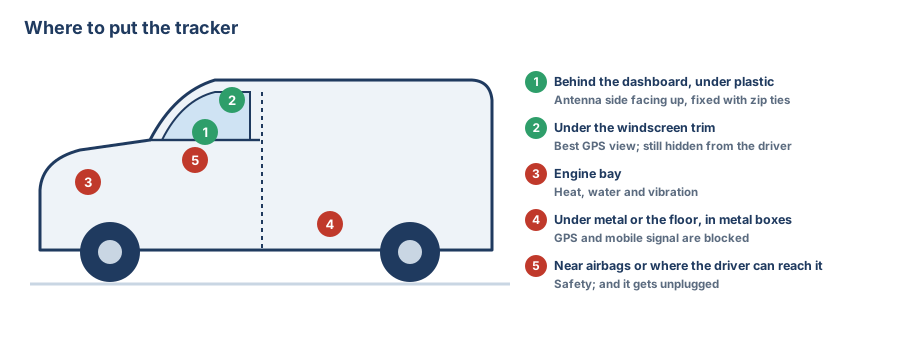
Good places
- Behind the dashboard, under plastic. The most common spot: hidden, dry, close to the power and ignition wires.
- Under the windscreen trim, at the top or the corner of the dashboard. The best GPS view, still out of sight.
Places to avoid
- The engine bay: heat, water and vibration kill trackers.
- Under metal, under the floor, inside metal toolboxes: the GPS and mobile signals do not get through.
- Near airbags, or anywhere the driver can reach it: a driver who can reach the tracker can unplug it, and anything near an airbag is a safety risk.
Rules
- Antenna side up. Most trackers mark the side that must face the sky (a logo, a label, or "this side up"). It must face up toward the sky, not the floor.
- Plastic and glass are fine; metal is not. The dashboard plastic and the windscreen let the signal through.
- Fix it firmly with zip ties so it does not rattle or move. A loose tracker reports false harsh-driving events.
- Keep it away from heat: heater ducts, the back of the instrument cluster, direct sun on the top of the dashboard.
- Keep the LEDs where you can see them with a panel removed, so the next technician can check it without hunting.
- Hidden, not unreachable. Photograph the location, so it can be found again for service.
Trucks, buses and machines
- Trucks: behind the dashboard works the same way. Avoid the area behind the cab: it is metal.
- Buses: behind the dashboard or in the driver's console; keep it out of passengers' reach.
- Machines (excavators, loaders): inside the cab, under the plastic of the console. The cab roof is usually metal: check the signal in the handover test.